
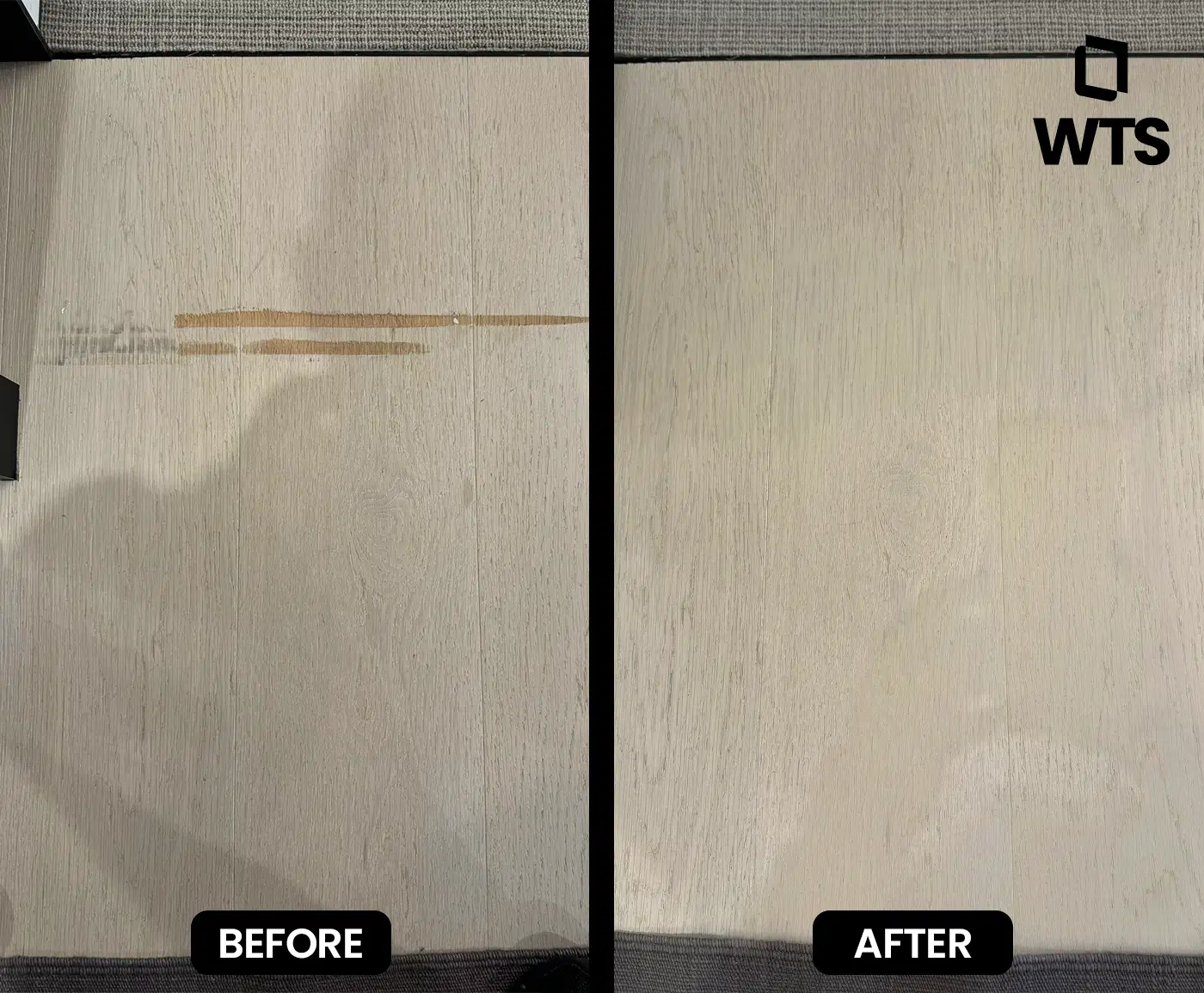
For New York City property managers, building superintendents, and general contractors, flooring is one of the highest-impact visual assets in any residential or commercial portfolio. When tenant turnover hits or common areas take a beating, you face a critical decision: should you commission a full sand-and-refinish, or opt for targeted hardwood floor repair and spot touch-ups?
Choosing incorrectly can drain your operational budget, extend vacancy turnaround times, and trigger headaches with strict co-op and condo boards. With over 100 years of combined experience and more than 500+ successful projects across NYC, WTS Surface Professionals has saved our clients tens of millions of dollars by deploying smarter, faster, and less disruptive surface restoration methods.
Below is your definitive guide to deciding between targeted repair and full refinishing, factoring in engineered wood limitations, NYC logistics, and strict building regulations.
When damage appears: whether it's gouges from a moving fridge, deep scratches from pets, or localized water rings near a radiator: it is easy to assume the entire room needs a complete overhaul. However, understanding the scope and mechanics of each approach protects your bottom line.
While full refinishing resets a room's aesthetic completely, it is rarely necessary for isolated blemishes. For property managers racing against aggressive lease commencement dates, targeted interventions deliver the required visual perfection in a fraction of the time. Explore our full range of restoration capabilities on our services page.
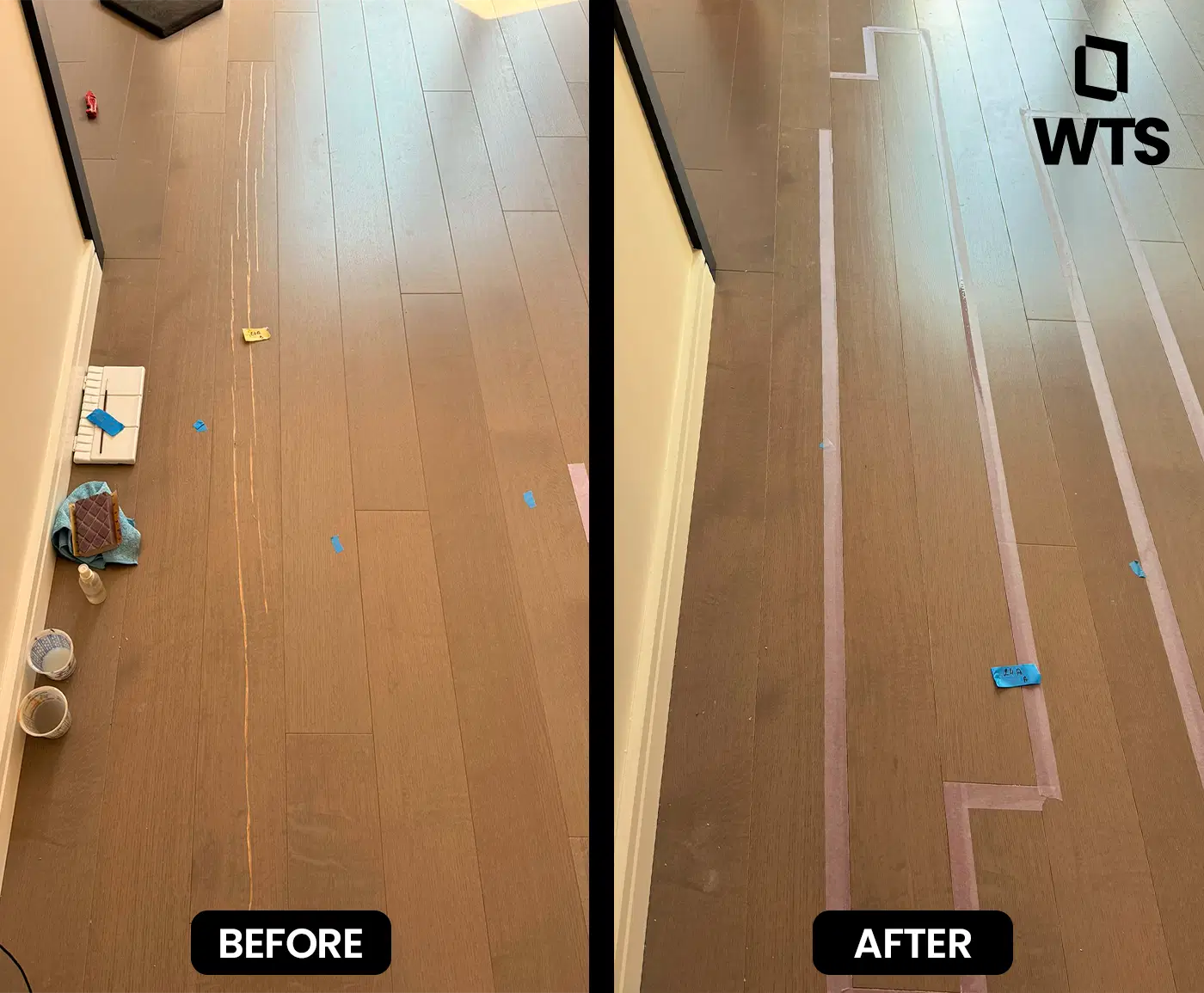
If your portfolio features modern Manhattan high-rises or luxury conversions, chances are high you are dealing with engineered hardwood rather than traditional solid timber. This distinction dictates your entire maintenance strategy.
Solid hardwood floors (typically ¾-inch thick) can endure 4 to 6 full sandings over their lifespan because each sanding removes roughly 1/32-inch of wood. Engineered flooring, conversely, consists of a thin top veneer over a plywood or HDF core.
Before committing to a full refinish, always inspect board edges at floor registers or doorways to verify wear-layer depth. Misjudging engineered veneer depth leads to catastrophic floor ruin: resulting in mandatory full replacement at ten times the cost.
In NYC property management, time is rent. Every day an apartment sits vacant waiting for floors to cure is lost revenue.
| Operational Factor | Targeted Spot Repair | Full Sand-and-Refinish |
|---|---|---|
| Duration | Completed in hours (often 1 day) | 3 to 7 days (including cure time) |
| Dust & Debris | Virtually zero dust; localized containment | Heavy airborne dust throughout the unit |
| Odor & Fumes | Minimal or zero VOC sealants | Strong polyurethane fumes requiring ventilation |
| Tenant Impact | Zero disruption; can be done in occupied units | Vacant unit strictly required |
Full refinishing turns a unit into an active construction zone. Sanding dust infiltrates every crevice, and chemical curing times halt all other punch list work (like painting or cabinetry installation). Targeted floor repairs integrate seamlessly into your final walkthrough schedule, allowing other trades to operate simultaneously without delay. View our project gallery to see how we maintain pristine job sites at our projects page.
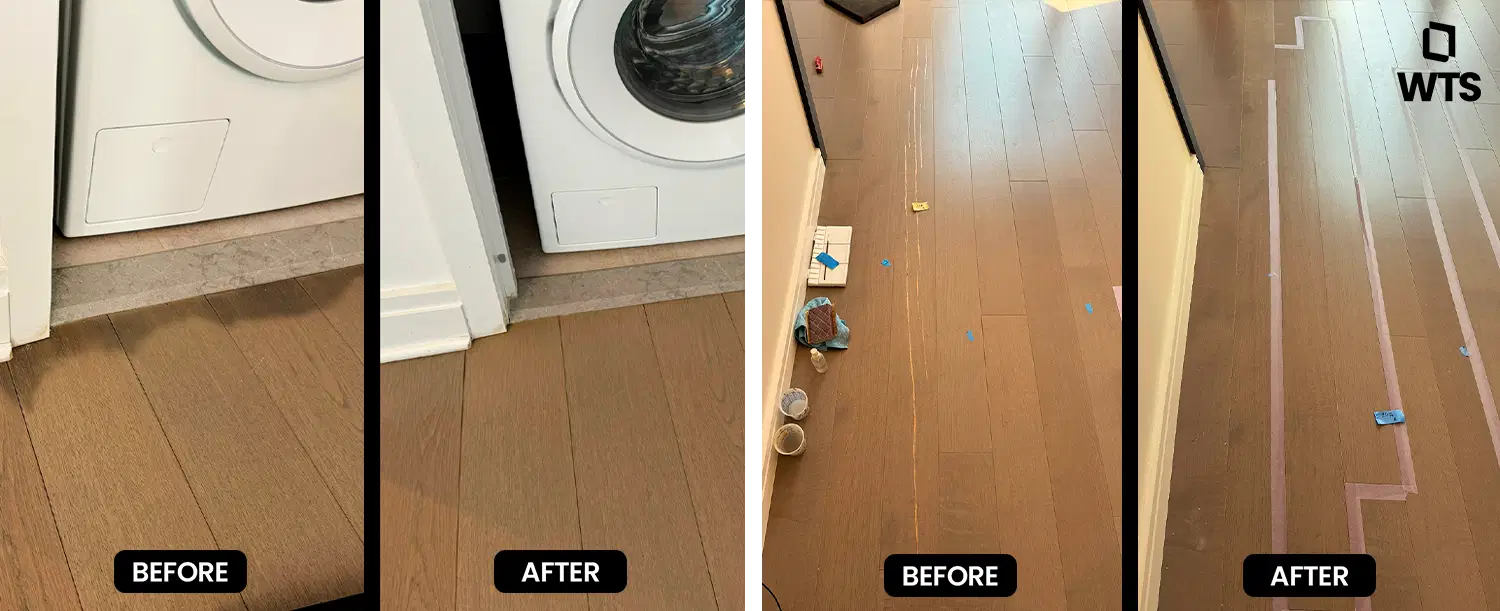
Operating in New York City means answering to rigorous alteration agreements, house rules, and demanding managing agents.
Carrying out a full sand-and-refinish in an occupied or recently closed co-op apartment often triggers massive friction:
Targeted surface repairs bypass these administrative bottlenecks. Because WTS Surface Professionals utilizes specialized touch-up techniques, our technicians operate quietly with hand tools and localized curing agents: satisfying building management while eliminating the need for complex board filings.
When managing dozens of units, cost efficiency dictates every capital allocation decision.
While a full refinish is cost-effective when 80% of a floor is severely worn, commissioning it to fix a localized scratch near an entryway is a waste of capital. By deploying targeted repairs for isolated damage, property managers save thousands of dollars per turnover while preserving the floor's precious engineered veneer for future years.
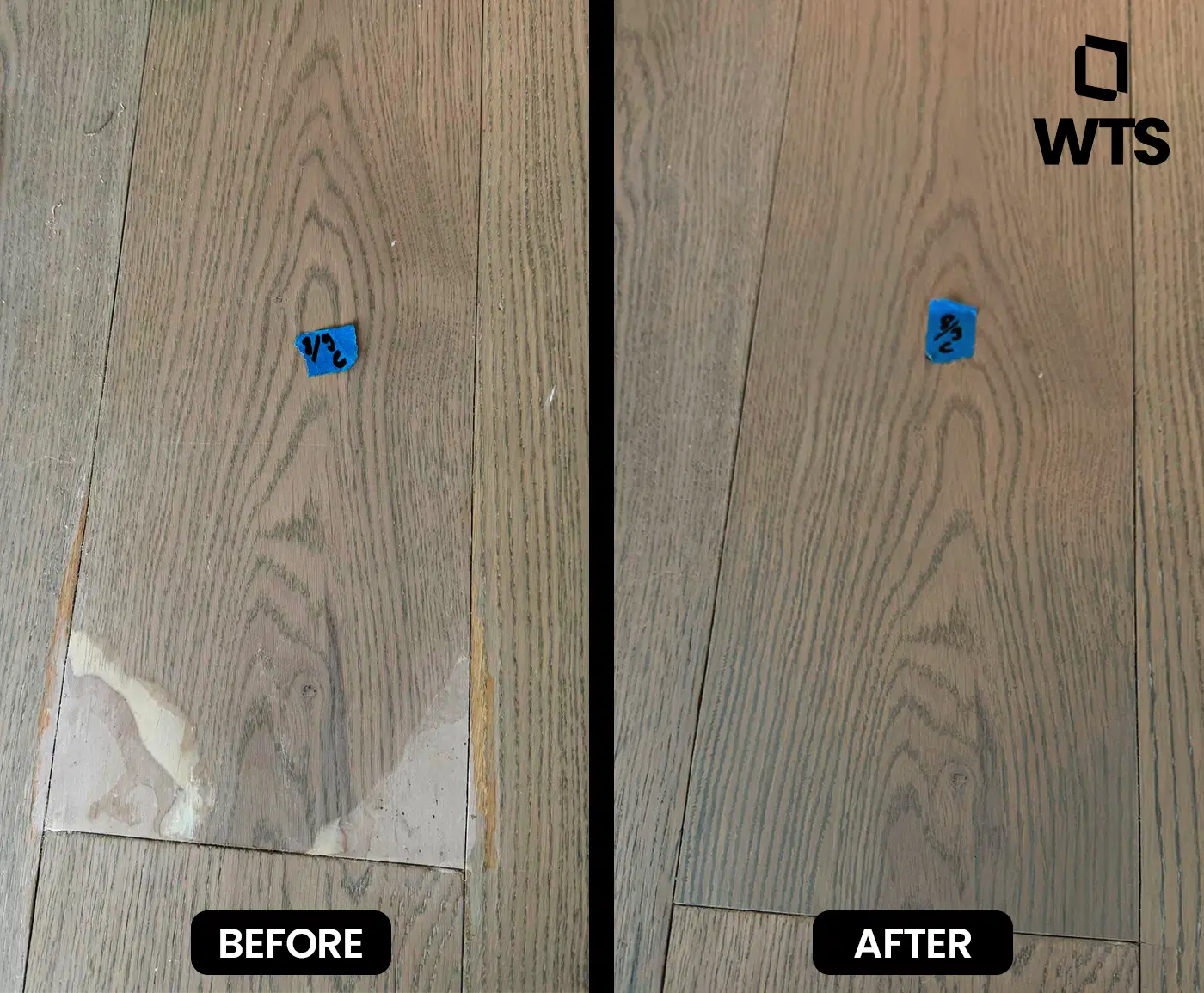
At WTS Surface Professionals, we understand the high-stakes environment of NYC real estate. You need a trusted partner who delivers exceptional results without the friction of full-scale demolition and replacement.
Our master craftspeople utilize advanced color-matching, grain-rebuilding, and professional-grade finishing compounds to make damage completely unnoticeable. Whether you manage luxury rentals in Jersey City, high-rises in Manhattan, or brownstones in Brooklyn, we deliver the triad of benefits your business demands: faster execution, lower costs, and zero unnecessary disruption.
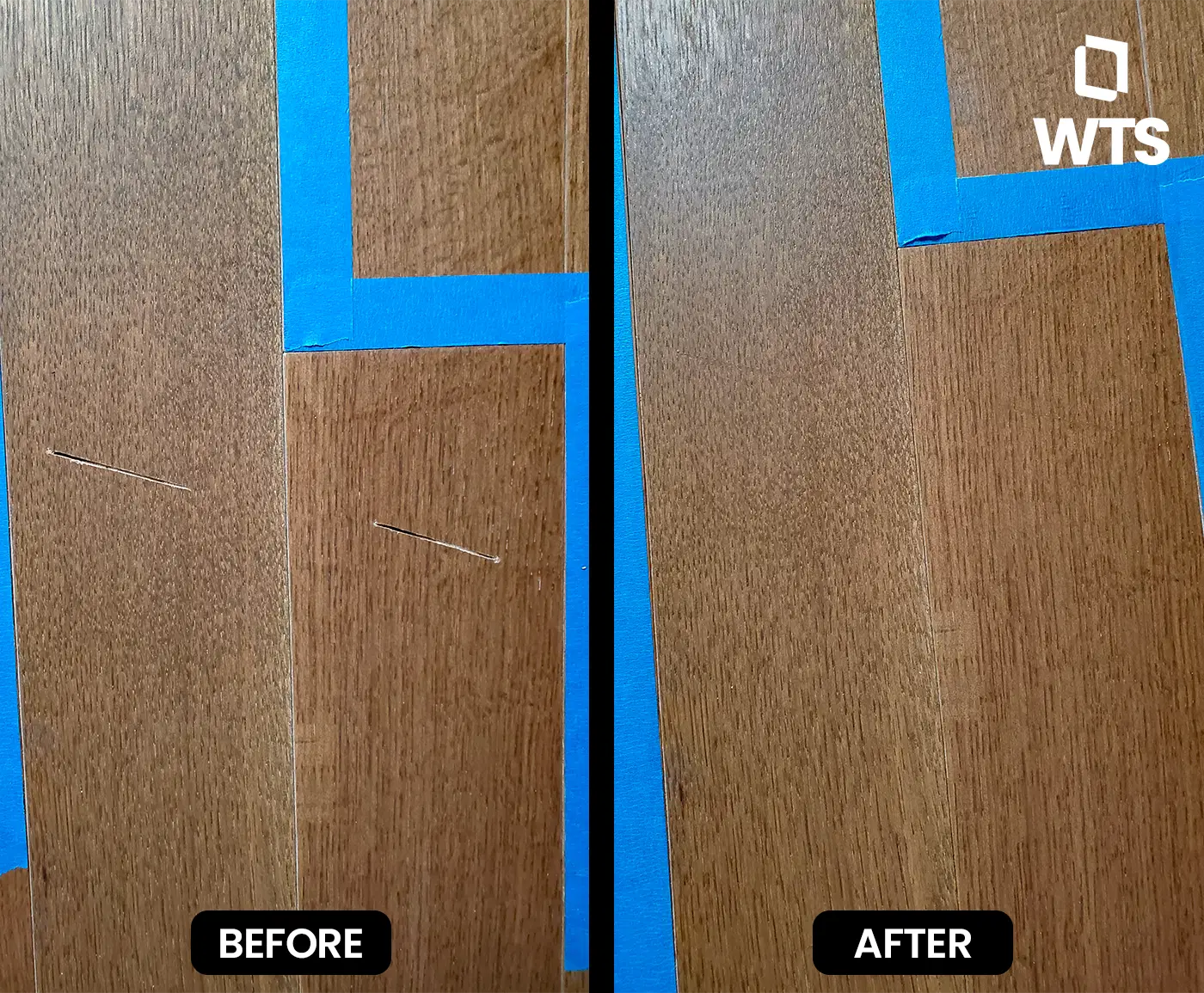
Don't let damaged floors delay your next tenant move-in or inflate your capital improvement budget. Partner with the surface restoration experts trusted by NYC's premier property managers and general contractors.
Request a fast quote today through our RLTY request form or contact our team directly to discuss your upcoming project requirements. Experience the WTS difference: flawless results, delivered on time.
At WTS, we specialize in innovative surface repair solutions that restore your surfaces. We are the Surface Experts. We can repair any surface, providing lasting and effective results with minimally disruptive methods. Reach out to our team today to get a quote!


