
When you walk into a luxury NYC apartment or a high-end commercial space and see a gouge in the hardwood or a dull, worn path through the hallway, the immediate instinct for many property managers and owners is to call for a full sand-and-refinish. It sounds like a total reset: a way to make everything "new" again.
But in the high-stakes world of New York City real estate, the "standard" solution is often the most problematic. Whether you are dealing with engineered hardwood or solid oak, the traditional path of sanding down or replacing boards is fraught with hidden costs, structural risks, and aesthetic nightmares.
At WTS Surface Professionals, we specialize in the "invisible" alternative. Before you commit to a weeks-long sanding project or start ripping up floorboards, you need to understand why restoration is often the more strategic, cost-effective, and visually superior choice.
The biggest misconception about wood floors is that they have an infinite lifespan as long as you keep sanding them. In reality, sanding is a destructive process. It is a "one-and-done" or, at most, a "twice-and-done" solution that permanently alters the floor.
Most modern high-end developments in NYC use engineered hardwood. While beautiful, these floors have a specific "wear layer" or wood veneer. You aren't sanding solid wood all the way to the subfloor; you are working with a thin slice of premium timber atop a plywood core.
Once you sand that veneer down to the tongue and groove, the floor is structurally compromised. Because of this limited depth, you can typically only perform a full sand once or twice in the entire life of the floor. If you choose to refinish for minor surface scratches, you are essentially "using up" the floor’s future.
Sanding a floor perfectly evenly across a large room is an art form that is becoming increasingly rare. Even with the best equipment, heavy-duty sanding machines can leave "chatter marks" or uneven dips that only become visible once the final finish is applied. By the time you see the wave in the wood, it’s too late: you’ve already removed the material.
Traditional refinishing is a messy, violent process for the surrounding architecture. To sand a floor, you have to get as close to the walls as possible. This requires extensive, time-consuming protection for baseboards and moldings. Even with the best prep, the heavy vibrations and rotating pads of edgers often scuff, nick, or dent expensive millwork.
Furthermore, applying the finish is a slow process. It takes days to dry and cure, and during that time, the fumes and wet product can easily migrate onto the baseboards, leading to a "messy" finish line that screams "renovation error."
If sanding is too extreme, the next logical step seems to be replacing the damaged boards. However, "patching" a floor is rarely as simple as it looks on paper.
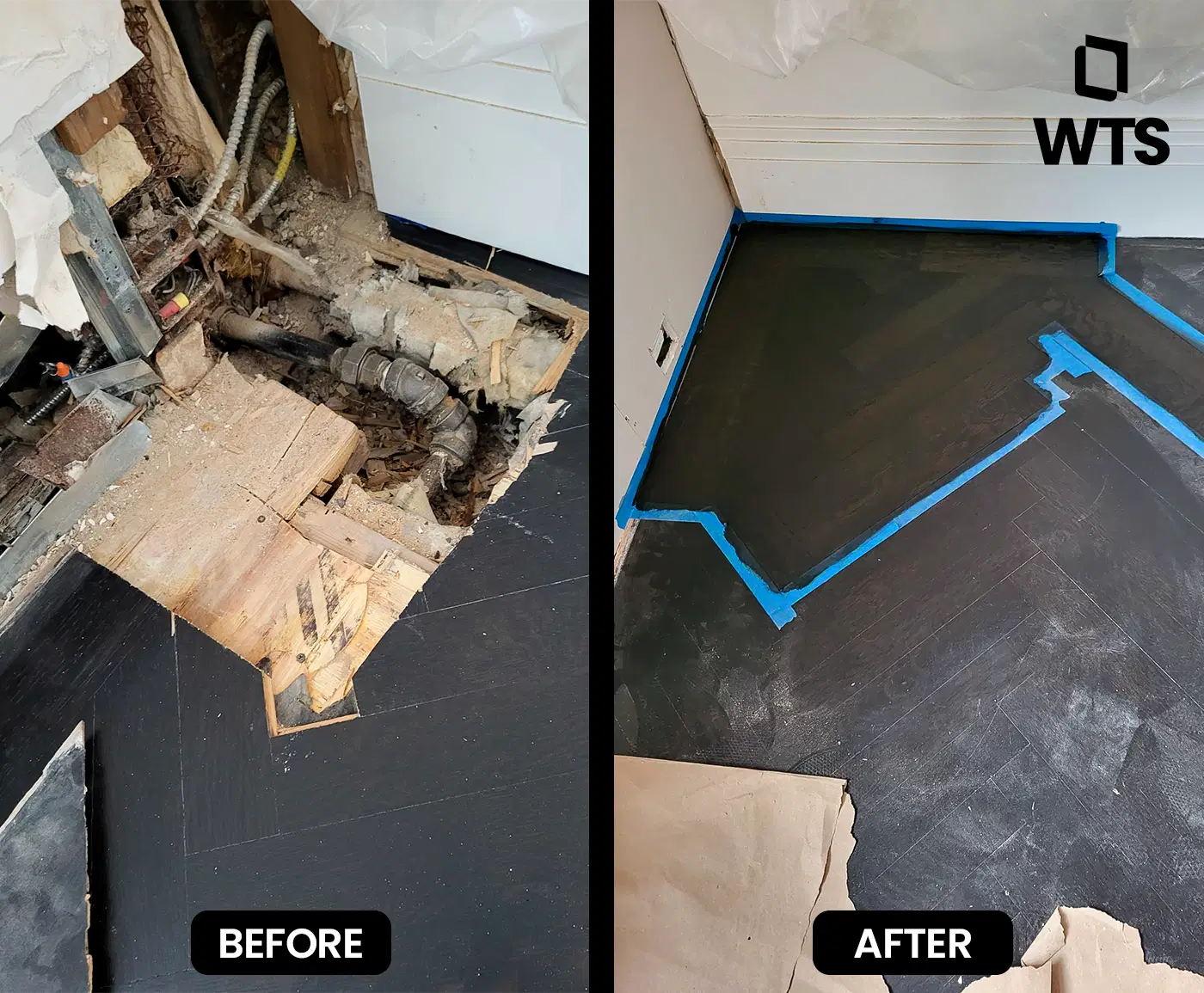
Opening up a floor to replace a single board or a small section is like opening a Pandora’s box. Wood floors are under tension. When you remove a board, you risk shifting the alignment of the surrounding floor. You may find that the subfloor is uneven, or that the interlocking mechanism of the remaining boards is damaged during the removal. What started as a "quick fix" for a scratch can quickly turn into a structural re-leveling project.
This is where most DIY or low-cost contractors fail. Wood is an organic material. It changes color as it ages, oxidizes, and is exposed to UV light from those massive NYC floor-to-ceiling windows.
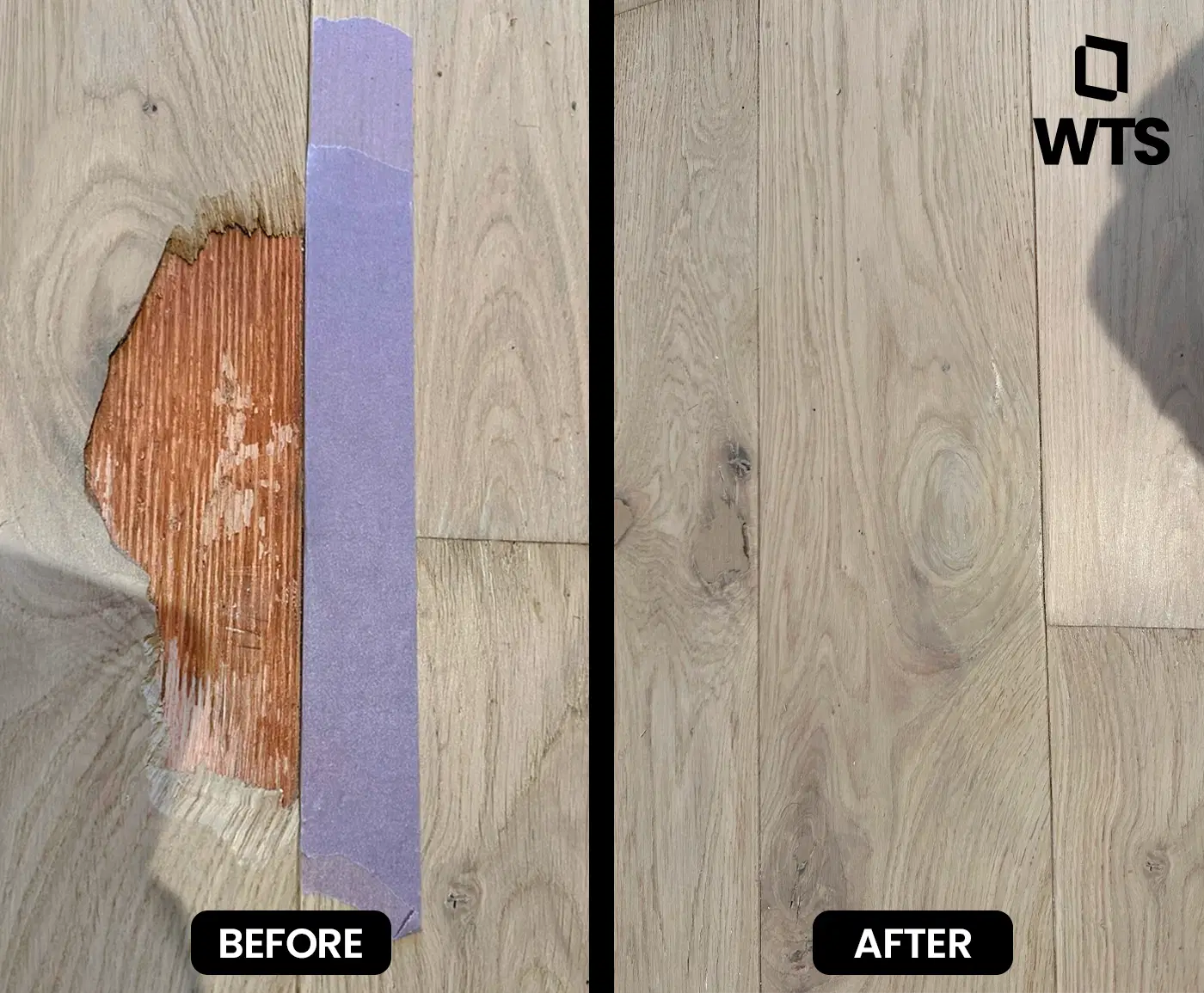
Even if you have a "spare box" of wood from the original installation batch, those boards have been sitting in a dark closet for years. They will not match the floor currently installed. The grain pattern will be different, the color will be off, and the sheen will be inconsistent. Without professional-grade color matching and grain replication, a replaced board looks like a sore thumb: a permanent reminder that a repair took place.
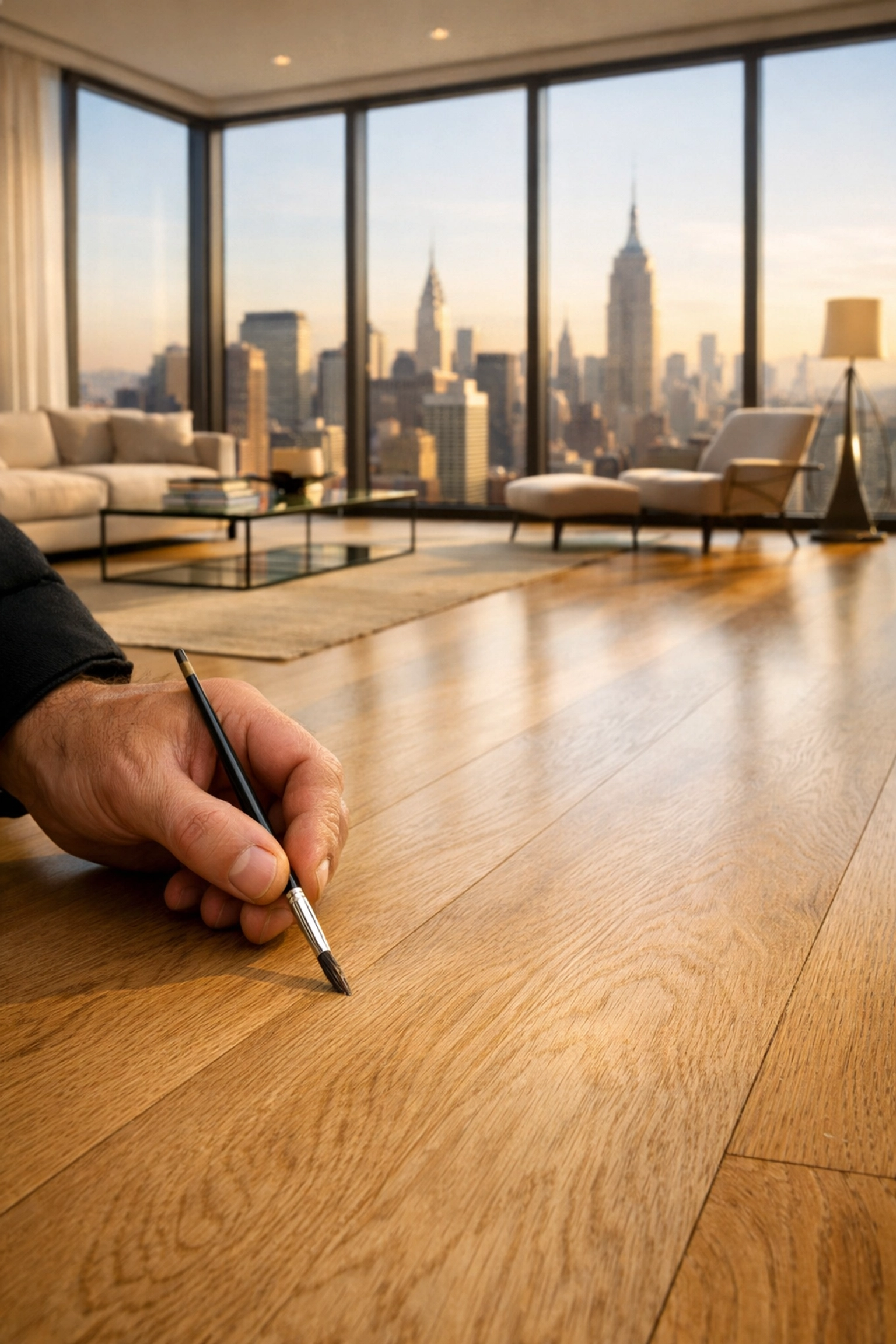
At WTS Surface Professionals, we approach wood floor issues with the precision of an artist and the efficiency of a project manager. We don't want to replace your floor; we want to restore it.
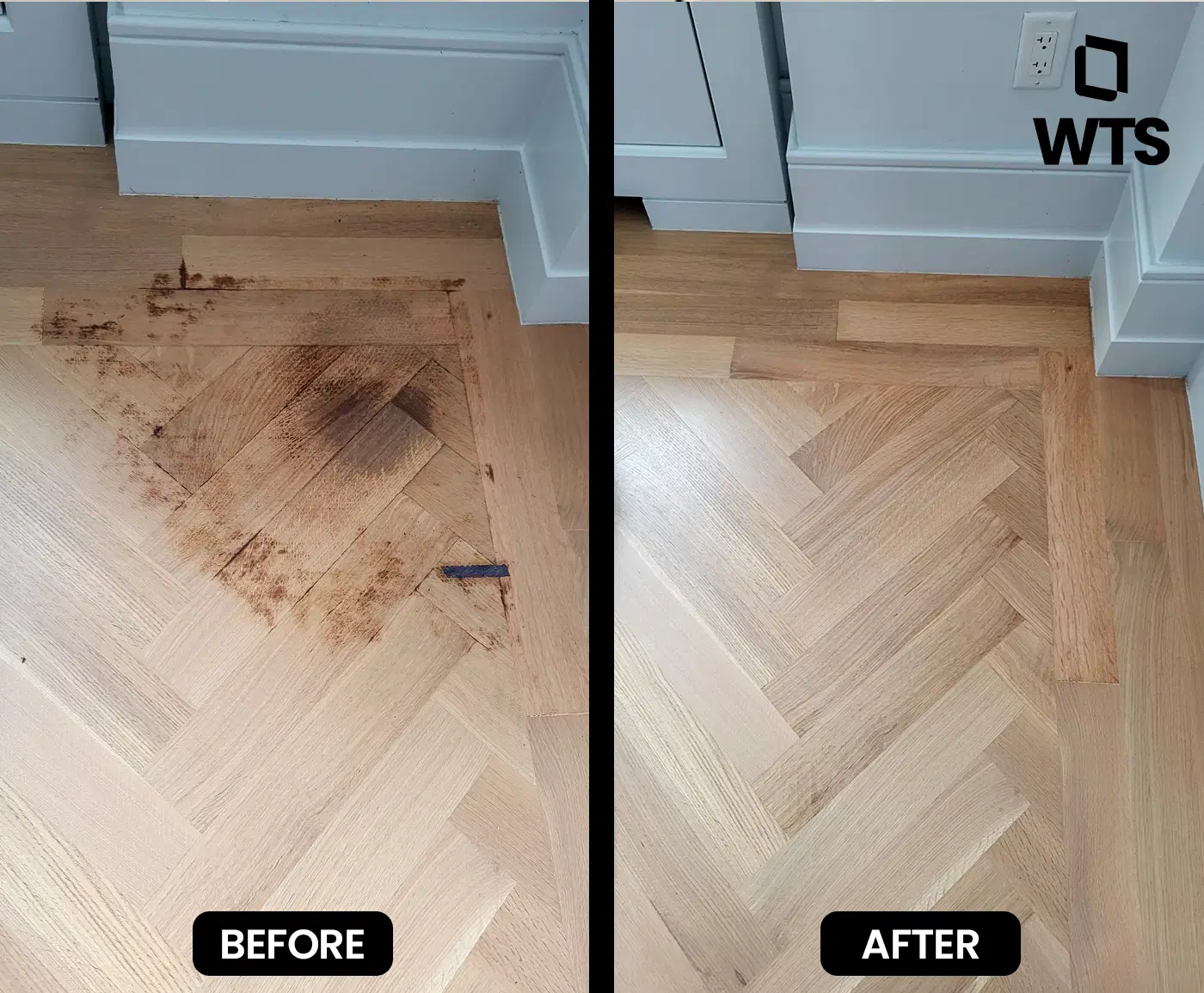
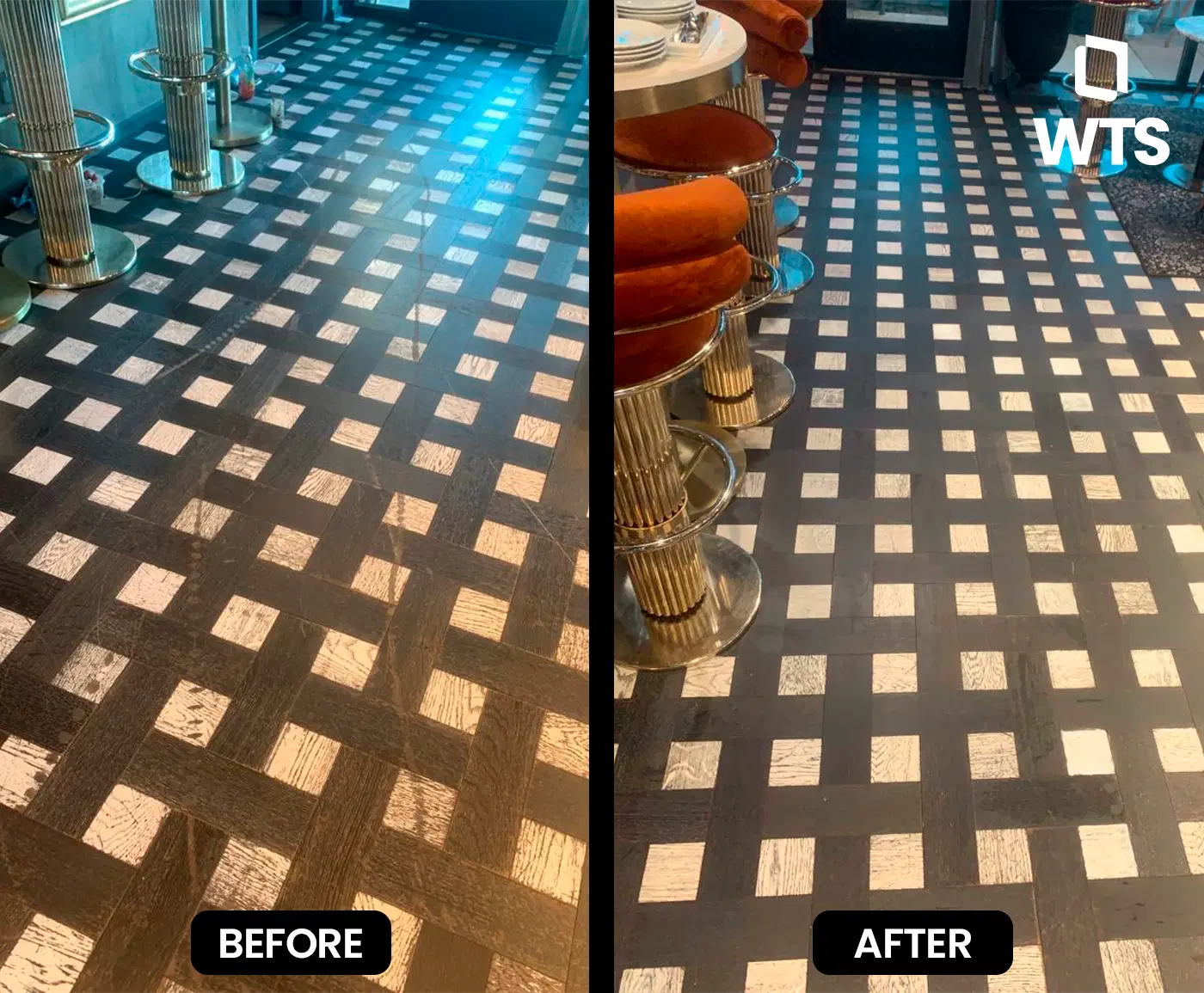
Our technicians don't just "cover up" scratches. We meticulously reconstruct the wood's surface. We use specialized resins and fillers that mimic the density of wood, and then we hand-paint the grain and color to match the surrounding area perfectly. Whether it’s a deep gouge from a moved appliance or a burn mark, our intervention is invisible to the naked eye.
A full refinish can take a week and requires the entire unit to be vacated due to dust and fumes. Our restoration process is targeted. We work on the specific areas that need attention, meaning your residents don't have to move out, and your projects don't have to stop. We are in and out in a fraction of the time, often completing in hours what would take others days.
The ROI on restoration is undeniable. By avoiding the costs of demolition, new material, and the labor-intensive process of full-room sanding, we save our clients tens of millions of dollars across our portfolio.
For construction managers and developers, the wood floor is often the final hurdle before a "Temporary Certificate of Occupancy" (TCO) or a final walk-through. A single scratch discovered during a final inspection can derail a closing.
You don't have time to re-sand the whole living room because a mover dropped a tool. You need a "magic wand" solution. WTS is that solution. We specialize in solving multi-surface punch lists faster than any traditional contractor.
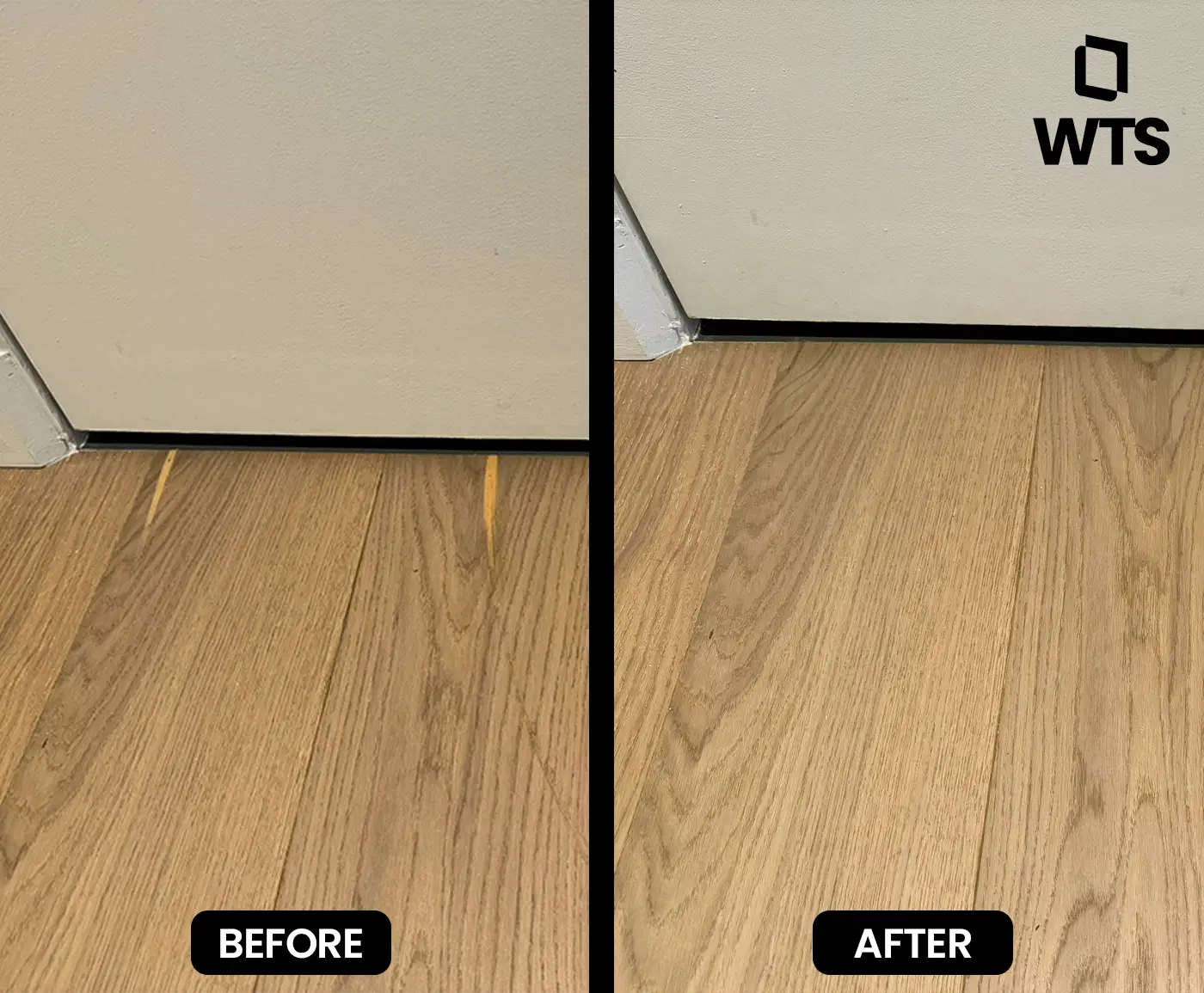
In our business, the highest compliment is that no one noticed we were there. When we perform a restoration on a geometric-patterned floor or a high-end herringbone, the goal is total uniformity.
Traditional sanding and replacement methods are loud, invasive, and often leave a footprint. Restoration is the surgical approach. We preserve the history and the material of the floor while removing the evidence of wear and tear.
From 15 Hudson Yards to 11 Hoyt Street, we have been the "one-stop shop" for the city's most demanding developers and property managers. They know that when a floor is on the line, the cost of a mistake is too high.
If you are facing a damaged wood floor and are weighing the options between a massive refinishing project or a risky replacement, stop. There is a third way.
Ready to see the "magic" for yourself?
Don't let a floor defect delay your project or drain your budget. Our team of experts is ready to provide a fast, non-disruptive, and flawless restoration that will make your floors look brand new without the headache of traditional methods.
Request a Demo Day or Contact Us today to see why WTS Surface Professionals is the definitive choice for surface restoration in New York City.
At WTS, we specialize in innovative surface repair solutions that restore your surfaces. We are the Surface Experts. We can repair any surface, providing lasting and effective results with minimally disruptive methods. Reach out to our team today to get a quote!


